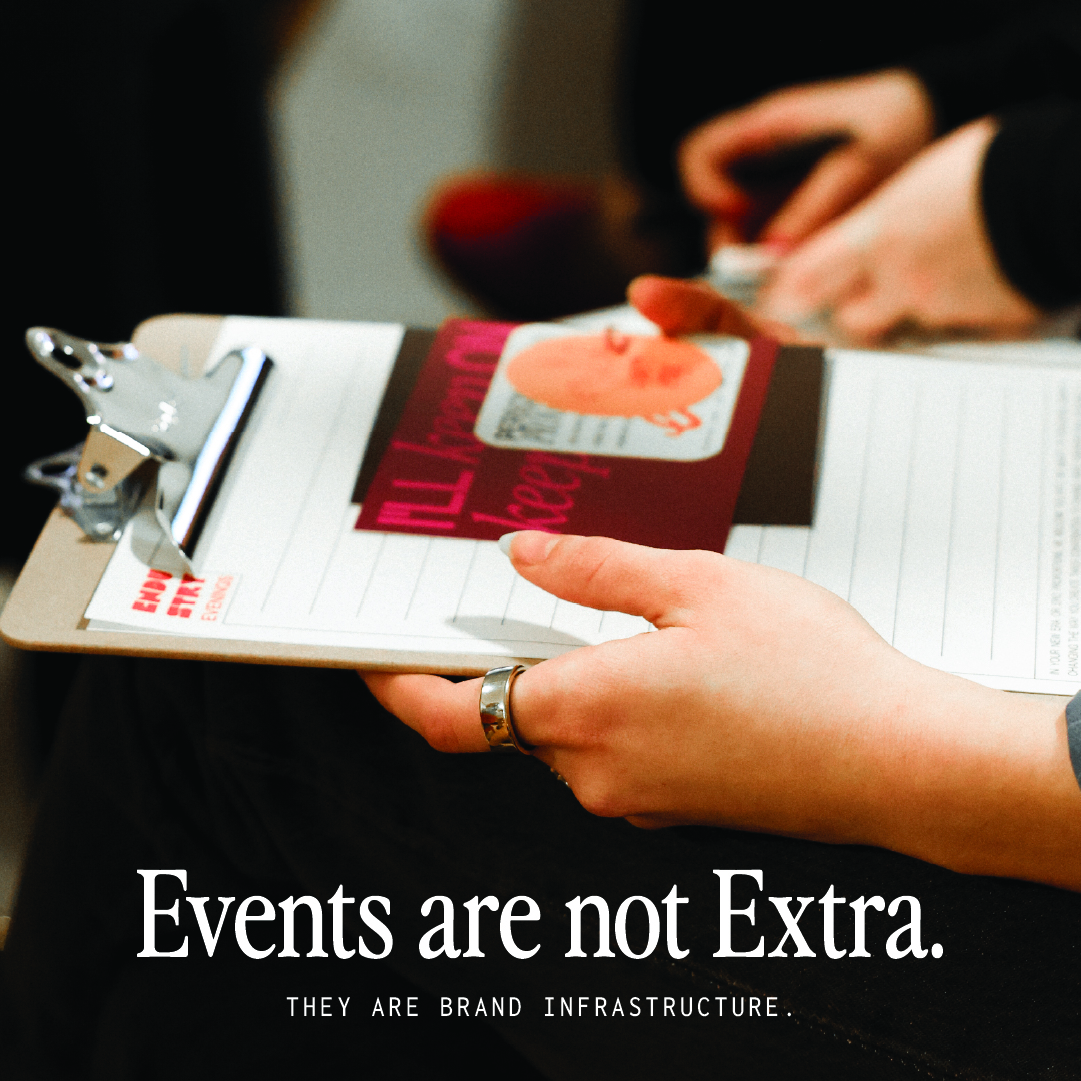
Events Are Not Extras. They Are Brand Infrastructure.
Last Updated
November 16, 2026
The Event Is Over. The Work Isn’t.
Brands put an incredible amount of energy into creating a few hours.
Months of planning. Guest lists. Signage. Lighting. Food. Flowers. The playlist someone changed twelve times. The tiny detail that took three meetings and, if you did it right, no one will ever consciously notice.
Then the doors open. People come. The thing happens and by the next morning, everyone’s asking for the recap Reel. We think that’s where brands are leaving a lot on the table.
A good event shouldn’t disappear when the room clears out. Honestly, the room might be the smallest part of what you just made. A live experience gives you something increasingly hard to manufacture: actual moments between actual people and your brand. That’s content, obviously, but not just the standard montage of people holding cocktails while your logo flashes in the corner.
There are conversations happening. Reactions. Questions. Stories from customers. A founder explaining something in a way they never would sitting down to “make content.” People touching the product, trying the thing, meeting the team. All the little unscripted pieces that make a brand feel like it exists in the real world.
Capture those well and one night can feed your content for months, but there’s more happening in the room than content. Someone who’s followed you for three years is finally meeting the person behind the brand. A longtime customer brings a friend who’s never heard of you. Two guests start talking and realize they should know each other. A potential partner sees your product in a completely different context and suddenly has an idea.
That’s community.
That’s business development.
Sometimes, that’s the beginning of the next thing before you even know there’s a next thing. And yes, it can sell.
We don’t mean turning every gathering into a glorified sales floor. Please don’t. Some of the best brand experiences barely feel like marketing at all.
There’s something powerful about letting someone experience a brand instead of constantly explaining it to them. They get to hold the product. Talk to the founder. Meet the team. See who else loves it. Ask the oddly specific question that’s been keeping them from buying. They get context they couldn’t get from an Instagram post or product page.
Maybe they purchase that night.
Maybe they don’t.
Maybe three weeks later they see your name again and remember how they felt in that room.
That counts too.
The same thing happens with press and partnerships.
A lot of brands ask, “How do we get people to talk about our event?”
We’d flip that question.
What are we creating that’s worth talking about?
Because inviting people somewhere isn’t inherently interesting.
Giving them a story is.
Maybe it’s an unexpected collaboration. Maybe the location makes no obvious sense until you experience it. Maybe you bring together people who wouldn’t normally be in the same room. Maybe you create something so specific to the brand that no one else could have hosted it.
Now there’s something to photograph. Something to share. Something for press to pick up. Something that makes a potential partner say, “Okay, we need to do something together.”
For service businesses, there’s another layer we don’t talk about enough: retention.
Most client relationships happen inside meetings, emails, deliverables and deadlines. Invite those same clients into your world without an agenda and the relationship changes. Have dinner. Host an open studio. Teach them something. Introduce them to someone they should know. Give them a reason to experience your brand when nobody is asking for feedback on round three.
You stop being the company they hired and become people they genuinely want in their orbit. That’s hard to put into a KPI and it’s also incredibly valuable.
Underneath all of this is the thing we think brands underestimate most: memory.
The internet is very good at giving us more things to see. It’s not particularly good at giving us things to remember.
So when we’re thinking about events, pop-ups, dinners, launches, workshops, activations—whatever form the thing takes—we’re not particularly interested in creating a beautiful night and calling it a win.
We want to know what happens because of it:
- What conversations can we capture?
- Who should meet each other?
- What story are people going to tell the next morning?
- What could this turn into three months from now?
- What will someone remember when your name comes across their screen six months later?
The event is one night.
The value of it shouldn’t be.